My Cardano Journey
Contributing to the Cardano ecosystem through governance and community engagement

Maureen Wepngong
As an active member of the Cardano community, I contribute to the ecosystem's growth and governance. From serving as a delegate in Cameroon to participating as a Delegated Representative (DRep), I'm committed to the responsible development of this revolutionary blockchain platform.
Cameroon Cardano Delegate & Constitution Signer
Constitutional Constitution Delegate
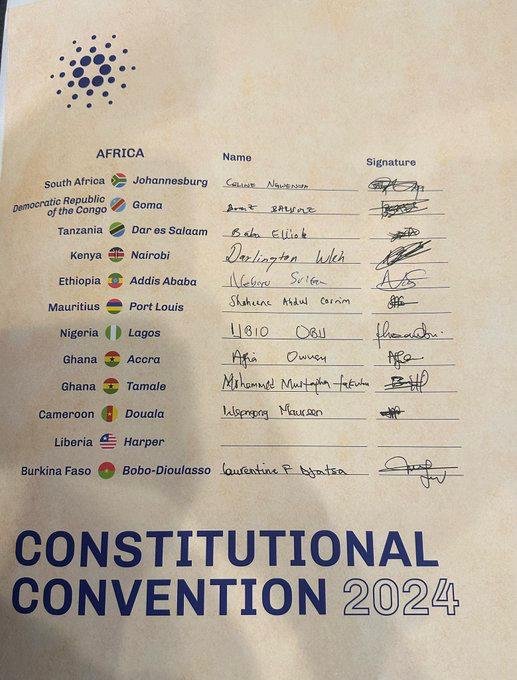
I had the honor of serving as a delegate from Cameroon in the Cardano constitutional process. This historic initiative brought together community members from around the world to establish the foundational governance principles for the Cardano blockchain.
As a delegate, I participated in deliberations and ultimately signed the Cardano Constitution, helping to shape the future of this groundbreaking ecosystem.
Cardano Delegated Representative (DRep)
Active Governance Participant
As a Delegated Representative (DRep) in the Cardano ecosystem, I participate in on-chain governance by voting on important proposals that shape the future of the blockchain. My approach to governance is guided by principles of inclusivity, sustainability, and long-term value creation.
I believe in making governance accessible to everyone, regardless of technical background or ADA holdings. Through my votes and community engagement, I strive to represent the interests of all stakeholders, especially those from underrepresented regions like Africa.
Cardano Voting History
View on Cardanoscan
My Vote on the Proposed Future Roadmap: NO (With Hope for Iteration)
Voted: No
March 16, 2025
Key Points
- DRep compensation needed for sustainable governance
- Support needed for grassroots projects (under $50k)
- More focus on inclusivity and global participation
Summary
While the roadmap has many positive aspects, it doesn't adequately address key issues of DRep sustainability, grassroots innovation, and global inclusivity. I voted NO with the hope that these concerns will be addressed in future iterations.
1. DRep Compensation
When I signed up to be a DRep, I thought it would be part-time volunteer work, a way to give back to the ecosystem I love. But this roadmap makes it clear that being a DRep is going to be more than that. A lot more. We're talking about evaluating hundreds (if not thousands) of proposals, getting into technical details, and making decisions that will shape Cardano's future for years to come. Expecting DReps to do this without compensation is like asking someone to run a marathon while carrying a fridge. Some of the Dreps might manage it for a while, but eventually, we're going to get tired. And when we do, who's left to govern? Only those who can afford to work for free. This then creates a privilege filter that excludes diverse voices and undermines the very decentralization we're trying to achieve.
I'm not saying this because I want to get paid. I started this journey with 39 ADA and a dream, and I'm more than happy to keep volunteering. But if we want governance to be sustainable, we need to address this issue head-on. Let's tie DRep compensation to participation, maybe through staking rewards for voting activity or a similar mechanism.
My Ask: Address DRep compensation before finalizing the roadmap. Otherwise, we're just building a system where only the independently wealthy can afford to govern.
2. Grassroots Innovation
The roadmap talks a lot about big projects and major initiatives, but it's missing something crucial: support for small, grassroots projects. The current Catalyst process has a minimum threshold of $50k for funding requests. That's great for established teams and organizations, but what about the individual developer with a brilliant idea? What about the small community group trying to build something innovative?
Innovation often comes from unexpected places, from people who don't have access to traditional funding channels. By setting such a high minimum threshold, we're potentially missing out on some of the most creative and impactful ideas.
My Ask: Create a specific funding track for small projects (under $50k) with a streamlined application process. Let's nurture innovation at all levels, not just from established players.
3. Global Inclusivity
My DRep campaign is built around the idea of building bridges and connecting communities that rarely talk, amplifying voices that have been told they're too small, too far, or too different to make a difference.
But this roadmap doesn't do enough to address the barriers that keep so many communities from participating. Language barriers, geographic isolation, and lack of resources are real challenges, and they're not going away on their own.
Where's the plan for translating governance materials into more languages? Where's the support for communities in underrepresented regions? Let's build bridges, not walls, and make sure everyone has a seat at the table.
I don't think the roadmap itself is wrong. In fact, I think it's a great starting point. But before we lock in long-term priorities, we need to address these gaps. Let's pause, refine, and return with a governance process that's fair, sustainable, and truly decentralized.
Cardano's governance is a historic experiment. Let's not rush into a system that risks replicating the centralized pitfalls we're trying to escape.
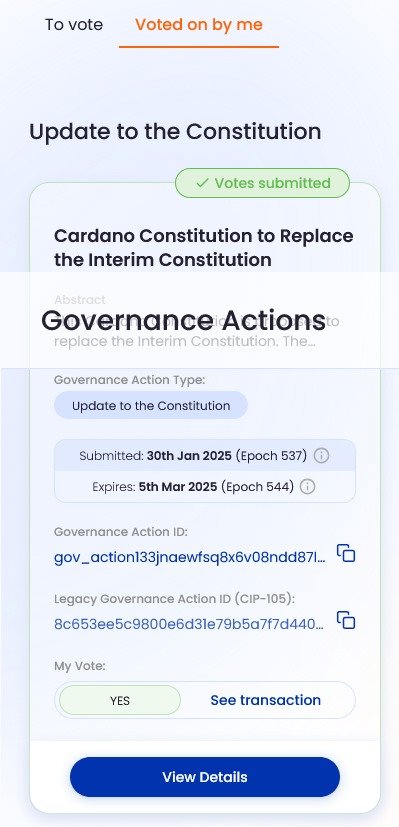
I Voted YES on the Cardano Constitution. Here's why.
Key Points
- The Constitution provides a solid foundation
- It can be improved over time through amendments
- Waiting for perfection would delay progress
- Built-in amendment process for future improvements
- Governance workshops planned for 2025
As a developer, I've learned some hard truths about building things. One of them is that perfection is like that "one last bug fix" that turns into a three-day refactoring spree. Every developer has once been there. You're about to push your code live, and suddenly you're thinking, "Maybe I should just reorganize the entire file structure... and rewrite all the comments... and maybe switch to a different framework while I'm at it?" That's exactly where we are with the Cardano Constitution right now.
And I can hear some folks saying, "But what if we vote no? Then we can make it perfect!" Here's the thing about perfect: it's the comfy couch of development. It feels nice to sit there and dream about it, but nothing actually gets shipped while you're sitting on that couch.
Over 1,400 people from 52 countries contributed to this document. That's like having the biggest, most diverse code review in history. And unlike that time someone reviewed my code and just wrote "??" on every line (true story), these contributors actually put in thoughtful work.
Now, what if we vote no? Well, let me paint that picture: we go back to the drawing board, spend months debating commas and semicolons, whether we should use "shall" or 'will', "ada" or ADA, lovelace or #"shoelaces" (And don't even get me started on equitable and fairly...) Meanwhile, other blockchains will be moving forward. The beauty of this Constitution is that it's not in an ancient scroll surrounded by people with powdered wigs protecting it. It's got an amendment process built in and we've got governance workshops planned for 2025. And let's talk about that amendment process for a second. It's not like the old days where you'd need to find someone with a fancy quill pen to make changes. We can actually update this thing without having to organize a continental congress or whatever they did back in the day. Though I guess a continental congress would make for some interesting Zoom calls...
In my experience, the best systems aren't born perfect - they evolve. Remember when JavaScript was just that thing you used to make annoying pop-ups? Look at it now. (Though some might argue it's still just for making annoying pop-ups, but that's a debate for another day.) The Cardano Constitution is our chance to start with something good and make it better over time. It's like launching any new project - you start with something solid and improve it based on real feedback. If we wait for perfect, we'll be waiting forever. So yeah, I vote YES. Not because it's perfect - it's not even close. I vote YES because it's good, it's solid, and most importantly, it's improvable. We're not carving this in stone tablets or writing it with those fancy feather pens. We're writing it in a format that can evolve with our community.
Think of it this way: if Web 1.0 developers had waited for the perfect solution, we'd still be arguing about whether this whole "internet thing" was going to catch on. Sometimes you need to get started and trust in your ability to improve things over time.
So let's do this. Let's move. And then, just like with everything else worth doing, we'll make it better together.
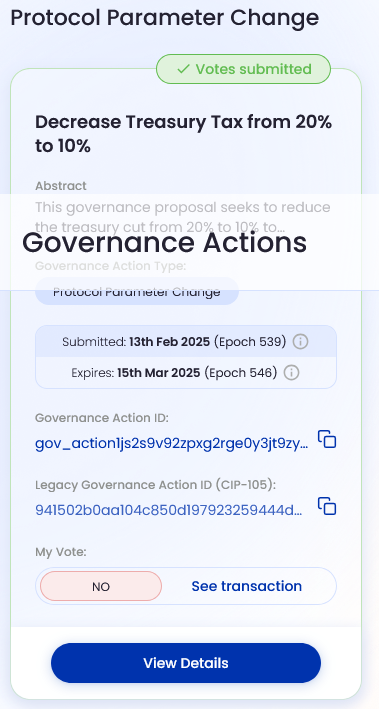
I Voted NO on the Treasury Tax Cuts. Here's why.
Key Points
- Proposal lacks clear impact analysis
- No alternative funding mechanisms proposed
- Timing is premature given current ecosystem needs
While I understand the desire to reduce fees, this proposal feels premature. We need a more comprehensive analysis of how these cuts would impact our ability to fund crucial ecosystem development.
The Treasury is not just a "tax" - it's our collective investment in Cardano's future. Before we reduce this investment, we need a clear plan for how we'll continue funding essential projects and initiatives.
My Governance Votes
Below are my votes on significant Cardano governance proposals, with links to my detailed rationales: